This was originally posted on the BMW MotorCycle Club Cape Forum here.
There are a number of people with the notion that it is unsafe or inadvisable to ever ride alone on gravel roads. For some, Rule #1 is “Never ride alone”.

I spent 14 days on a trip in December 2015, 8 of which involved riding alone on some more serious gravel roads and passes in SA and Lesotho. On one level that reflects my opinion of this particular “rule”.
But before we get into holy wars about whether one should or shouldn’t ride alone on gravel, I think it needs to be acknowledged that not everybody’s appetite for risk is the same. And risk doesn’t mean the same to everybody.
Here’s an excellent blog post about that: “My Risk Is Sensible, Yours Is Stupid”
In one sense we all ride alone. Even in a larger group, we are all alone under our helmets, and unless we’re connected via intercom to a pillion or fellow rider, we are individuals and can become disconnected to the rest of the group. Dualsport motorcycling is one of he best activities for an introvert like me. I don’t have to socialise much during the day, but I can participate in a group.
The only way I can survive the long group trips is to ensure I have a single room. I need space and time alone to recharge.
I also suffer from compulsive self-reliance. Asking for help (or for accompaniment on a ride) is the last thing I’ll try. I’ll bust a gut to try and do it myself first.
But there’s nothing like being in the middle of the Karoo, or on the top of a mountain pass – stok-stil-aleen. There’s an other-worldliness about being so far away from anyone else, and a huge sense of achievement at having done so solo.
Whilst perambulating some of the dusty corners of our beautiful country, I was mentally putting together a checklist of what I thought important for those of us willing to take the extra risk that others avoid.
- Pick it up
If you can’t pick up your bike – don’t ride alone. But learn to pick it up with moderate ease.If you can’t pick it up on a level and easily accessible surface, then there’s no way you will manage at 3000m when it is fully fuelled and laden, and you’ve bruised your ribs on the windshield or rocks. Or in 38 degree heat with humidity running at 80%.
- Take it with you
Andyman (on the BMWMCCC site) has a number of great posts about the things he carries. He’s also put together an excellent training on what to carry. And in a group you can share the load – not everyone needs to carry a compressor.But if you are planning a trip on your own – you must carry everything with you. The 1200 GSA is a great pack-horse, I’m not sure how I’d manage with a smaller bike.The panniers can take plenty – but it all adds weight that affect the handling and the pick-up-ability (see 1). But you’ll see that even on group rides I’ll often pack everything, just for practice and the comfort that I can manage if I need to.
SELF SUFFICENCY OUT IN THE CUDS
TECH TORQUE What do you keep in your TWALCOM RALLY RAID box? - Fix it yourself
Punctures are the most frequent mishap on a ride. In 100,000K I’ve had 4. The 1200 has tubeless tires which are much simpler to fix than the 650’s and 800’s tubed ones.I don’t recommend sticking a nail in your tyre – but find a way to practice fixing your own tyres – or be absolutely sure you can do it if you need to.But punctures aren’t the only mechanical menace. Bikes are pretty reliable these days, particularly BMWs. You don’t need to be a mechanic to be able to ride alone – but being ready and able to tackle minor running repairs may be the difference between a successful trip and misery.
Andyman has a good piece on tyre repairs: TECH TORQUE – TOURING AND COPING WITH PUNCTURES
- Be prepared
Not only by taking sufficient tools and stuff to address minor problems (cable ties, pratley’s steel, duct tape etc.), but also know the limitations of your bike. And don’t forget to address the bigger issues (like who gets the life-insurance and when they can switch off the life-support machines)Carry ICE information (In Case of Emergency). I’ve had ICE stickers on my bike and helmet, but I now wear an ICE-Tag nylon wrist-band. Carry ICE information on your phone.
Make sure your ICE contacts know who they are and what to do with the body …Seriously, check the forum. Andyman has a couple of excellent posts on being prepared in different ways.
ROCKS UNDER YOUR PILLOW: or GET YOURSELF READY TO DIE
TECH TORQUE – 1200GSA – engine breather tube relocation on airbox project - Tell someone
As a loner this has been something I’ve skipped in the past. But letting someone (preferably your ICE contact) know where you are and where you’re headed is really a no-brainer. It may not mean much to me, but it gives my family a more comfortable feeling if I tell them where I’m going and check in now and again. Rather than letting friends and family wonder for weeks why there’s been no facebook posts …Other riders have wives and kids who are more demanding on this front.This is sometimes difficult – on a long trip you may only be able to give sketchy details of where you may be on a particular day.I’d give family a rough routes and told them I’d try to stick to it if possible – and contact them at the end of each day to let them know I’m ok.
The SPOT 3 device is a huge benefit now, as a GPS tracker – my ICE contacts can see where I’ve been; it can send them an “I’m ok” message; and can summon the helicopters if I’m really desperate. I recommend this to anyone who rides alone.
On my recent trip I changed routes without worrying too much as I knew there would be a good enough track to find me. SPOT now covers Southern Africa
- Reliable steed
There’s no point in venturing out if you don’t have a reliable bike. A mechanical problem in a remote and inaccessible place could be the end of you.And have your bike regularly maintained by someone who knows the model inside-out and upside down. I only use the dealers. I’ve had good feedback and reliability. They may be over-careful and replace things sooner than your buddy down at the corner bike-shop – but they have a good idea of what goes wrong on these beautiful machines during their lifespan. - Say No
Daniel Kahneman has a great book “Thinking Fast, Thinking slow”. In it he describes the “sunk-cost fallacy”, a trap into which I frequently fall. This has two faces – if things are going well, we expect them to continue going well.Conversely, we also look at how much it has cost to get to this point, and that overrides rational decisions about continuing on the same path (a gambler cannot believe that the odds of a spin on a roulette wheel are unaffected by previous spins – he thinks 10 even numbers in a row means the next one must be odd).
I find this happening in a couple of ways – I’ve come far down a trail and it’s an effort to turn back and go around somehow; I’ve survived this far, but the next obstacle looks a bit tougher than I’m normally willing to try. So I’ll risk something that may be out of my comfort zone and then come a cropper.
I squashed my foot between a rock and bike on a rough 4×4 trail this way. It’s been a long and painful lesson.
Learning to tell myself “No”, and “Enough”, is something I’m still learning.
- ATTGAT
There is no alternative. I truly believe that decent boots made the difference between a seriously damaged foot, and being able to pick up my bike and carry on (albeit in pain). If I’d been wearing lesser gear, the bike may still be lying on top of my foot in the back of beyond.There’s some gear I’m not sold on – but boots are critical; the BMW riding pants have excellent knee and hip protection; and a rugged and armoured jacket are a must. Even in 42 degree heat. - Like yourself
If you haven’t been able to make friends with the voices in your head, then spending a week or more alone may not be the best thing for your sanity. Some people have the inverse problem I suffer – a need to socialise and to be around others is the only way they have energy.That may be part of their reason for seeing riding alone as a huge no-no. Whatever, you may find yourself in the middle of nowhere with no-one around, and the silence may be overwhelming.Know yourself. - Training and experience
Needless to say, riding alone is not something I’d recommend to beginner riders. The club has some great training, as does places like Country-Trax. If you aren’t comfortable with intermediate-level training – then it’s probably a signal you need to keep in groups – or to really simple roads.But, and this may be contentious, I really hate the “ride to 70% of your ability” or “ride within your limitations”. If you’ve never stretched and pressed against those limitations, then you have no clue what they are. So you may never progress to a point of feeling comfortable.I’m continually pushing myself against my comfort limits, in order to learn more and see how just what those limits are. I don’t like sand – but I’ll keep trying until I’m comfortable enough to get through.For some, just getting out and tackling a 2km stretch of gravel on your own may be a significant limit.
- Fitness
I’m not fit. And there are times on the bike where this is a huge impediment. Greater physical fitness will allow you an easier ride, particularly when you need extra effort – like picking up the bike for the third time in an hour in Lesotho, or laying it on it’s side for the 5th time to pack sand underneath the back wheel in 44 degree heat.There are places I won’t travel, and routes I won’t take – purely because I’m not fit enough.This dovetails with the last point – you need to choose the route to suit your level of experience and fitness. No point in tackling desert sand if your heart can’t take the heat.
- No Precious
If you’re the type who worries about every little scratch on your pride and beauty – then you might not want to tackle the roads-less-travelled on your ace.There’s no-one to help you pick your precious up gently and carefully. I’ve fallen in an awkward place, with the bike not in an ideal position, and had to drag it around on rocks to get it pointing in a better direction.You may come to a point where the only way to proceed is to push the f***ing thing on it’s side, pack some rocks underneath and try again, and again.
Or lay it on it’s side and drag it around 180 degrees so it points downhill and go back.
Extra crash-bars and panniers on the 1200 are a great help in protecting the bike a bit in rough terrain. The only downside is that my panniers now need some panel-beating.
- Take a map
GPS devices are ubiquitous. I use a Garmin Zumo 350 on the bike, and it has proved reliable. Smartphone GPS is less helpful in the sticks (although a useful backup when you have signal).Sometimes, when you are off the pre-planned route for some reason – the small ‘window’ and sluggish response of the GPS makes it very difficult to get a good understanding of where you are, and in which direction the nearest fuel stop really is. The GPS may tell you fuel is 8km away – but the mountain in the way will make that choice a bit impractical. And sometimes the GPS map you have loaded doesn’t quite match up to the track you are physically on.
Taking a reasonably detailed paper map gives you more options. It would have saved much stress on a number of occasions if I’d remembered to actually pack one …
This is by no means a complete list, a work in progress as I learn more about my riding solo. It is also not a complete list of relevant and excellent posts by Andy.
As a youngster I was drawn to the camel cigarette advertising, dreaming about being alone in some far-off and exotic place – a manly-man doing manly things.
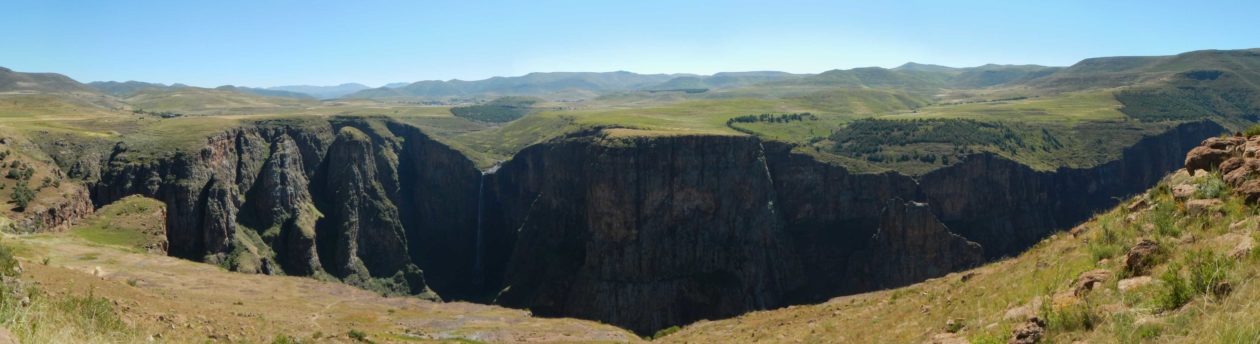
At the top of Matabeng pass in Lesotho – having bellowed my delight at making it to the top to an audience of no-one – I felt a flash-memory of those adverts.
My inner little boy screaming “f*** yeah, that’s me!”
